
Dollar-Cost Averaging Explained: The Simple Way Beginners Build Wealth
Why Trying to Time the Market Usually Fails: Dollar-Cost Averaging Explained: The Simple Way Beginners Build Wealth
One of the biggest fears new investors have is simple:
“What if I invest… and the market drops tomorrow?”
Because of that fear, many people wait.
Instead of starting, they look for:
- the “perfect time”
- the next crash
- better news
- more certainty
However, while they wait, time keeps moving—and time is the most powerful force in investing.
That’s exactly where a simple strategy called dollar-cost averaging changes everything.
What Is Dollar-Cost Averaging? (Simple Definition)
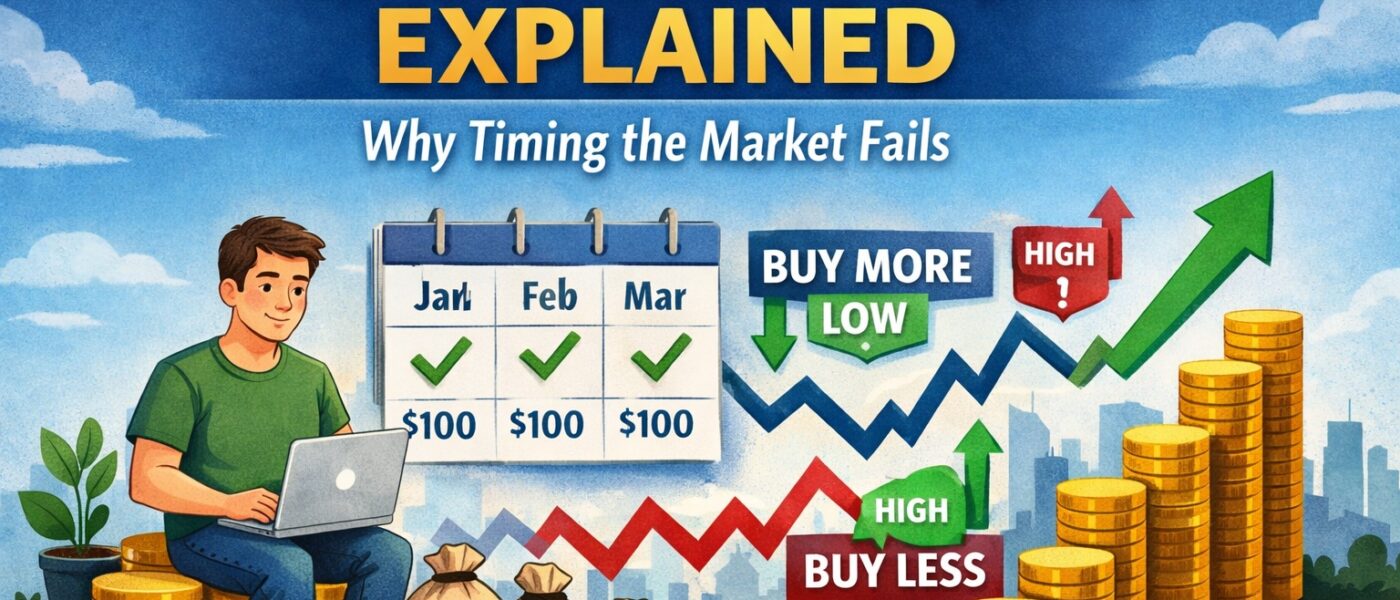
In simple terms, dollar-cost averaging means:
You invest a fixed amount of money
on a regular schedule
no matter what the market is doing.
For example:
- $100 every month
- automatically invested
- whether prices are high or low
As a result, the process becomes simple:
1. No guessing.
2. No stress.
3. No timing.
Just consistent investing over time.
Why Beginners Try to Time the Market
At first, most new investors believe success comes from:
- buying at the exact bottom
- selling at the exact top
- predicting news and crashes
Although this sounds smart, in real life it almost never works.
In fact, even professional investors:
- miss bottoms
- panic during drops
- hold cash too long
Therefore, beginners trying to time perfectly are playing a very difficult game.
By contrast, dollar-cost averaging chooses a different game entirely:
Consistency instead of prediction.
How Dollar-Cost Averaging Works in Real Life
To understand this better, imagine two investors.
Investor A — waits for the “perfect time”
- Holds cash for years
- Misses market growth
- Feels stressed about when to start
Investor B — uses dollar-cost averaging
- Invests every month automatically
- Buys more shares when prices are low
- Buys fewer when prices are high
- Keeps moving ahead without stress
Over long periods, Investor B usually wins—
not because of genius, but because of discipline and consistency.
The Hidden Power: Buying More When Prices Are Low
Here’s the simple truth most people overlook:
When you invest the same dollar amount every month:
- High prices → you buy fewer shares
- Low prices → you buy more shares
As a result, market drops become:
opportunities instead of disasters.
Because of this shift, many investors begin to feel calmer and more confident about market volatility.
Does Dollar-Cost Averaging Always Beat Lump-Sum Investing?
Mathematically speaking, investing a large amount all at once can sometimes win,
since markets often rise over long periods.
However, for beginners, the real issue isn’t math—
it’s behavior.
Dollar-cost averaging helps people:
- start sooner
- stay consistent
- avoid panic
- keep investing during crashes
Therefore, behavior—more than timing—usually determines long-term success.
The Biggest Mistake People Make With This Strategy
Even though the strategy is simple, people still break it.
Common mistakes include:
- stopping when the market drops
- skipping months
- checking investments daily
- trying to “pause until things look better”
Because of this, dollar-cost averaging only works if you:
keep going—especially when it feels uncomfortable.
How to Start Dollar-Cost Averaging Step-by-Step
Step 1 — Open a simple investing account
First, choose a platform with:
- low fees
- automatic investing
- beginner-friendly tools
One widely trusted choice for long-term investors is Charles Schwab.
👉 Open your Schwab account and get started
(Affiliate disclosure: I may earn a commission at no extra cost to you.)
Step 2 — Pick a realistic monthly amount
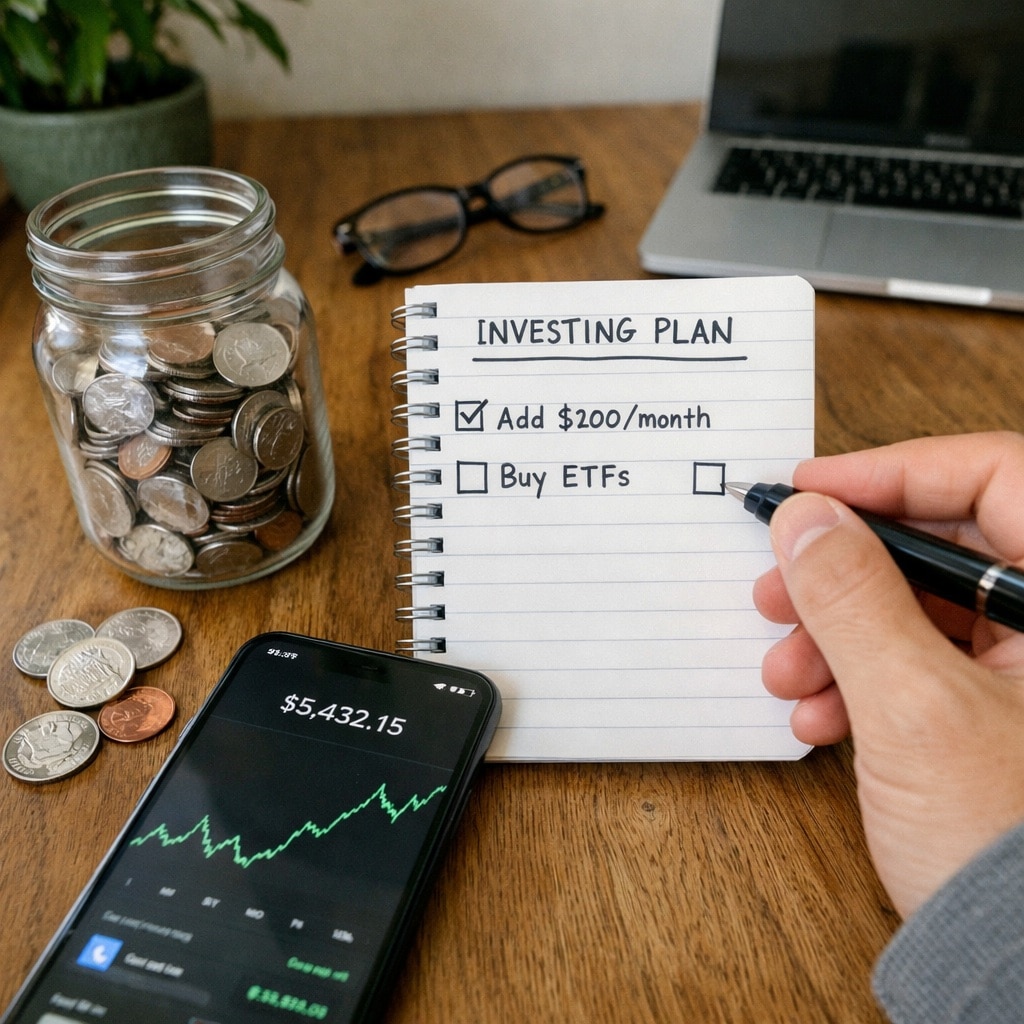
Next, start with something you can repeat:
- $50
- $100
- $250
Most importantly, consistency matters more than size.
Later, you can always increase the amount.
Step 3 — Invest in simple, broad ETFs
Typically, beginners use:
- a total U.S. market ETF
- an international market ETF
- an optional bond ETF
If you’d like a full beginner system, read:
➡ The Simple 3-Fund ETF Portfolio for Beginners
Step 4 — Automate everything
Finally, set up:
- automatic bank transfer
- automatic ETF buy
- a monthly schedule
After that, let time do the heavy lifting.
Why This Strategy Leads Toward Real Freedom
Dollar-cost averaging isn’t exciting.
It won’t make headlines, and it won’t promise quick riches.
Nevertheless, over many years, it quietly builds:
- discipline
- ownership
- growing assets
- future options
And ultimately, those are the real ingredients of financial freedom.
Because freedom rarely comes from:
one lucky trade.
Instead, it usually comes from:
small, steady actions repeated for years.
Final Thought
Dollar-Cost Averaging Explained: The Simple Way Beginners Build Wealth
You don’t need to predict the market.
You don’t need perfect timing.
And you don’t need thousands of dollars to start.
All you truly need is:
- a simple plan
- consistent investing
- patience to let time work
So start small.
Stay steady.
And let the process build your future.